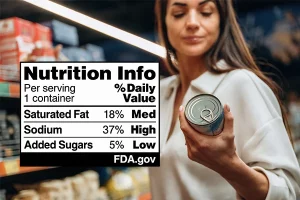

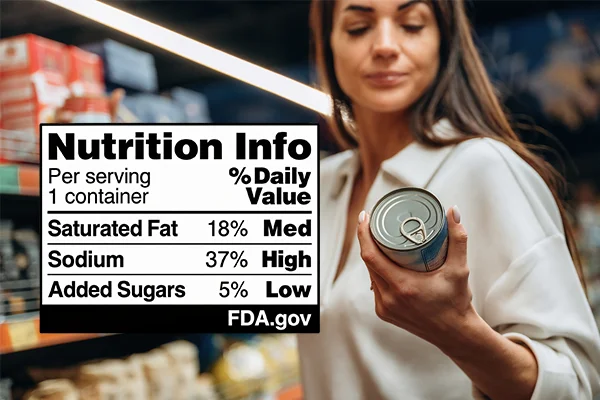
The FDA’s proposed front-of-package (FOP) nutrition labelling requirements could change how food manufacturers display nutrition information on packaged products in the United States.
Under the proposal, most packaged foods would need a standardized Nutrition Info box highlighting saturated fat, sodium, and added sugars.
With the rule still under review, food businesses should understand the proposed requirements and start preparing their nutrition data and packaging workflows for potential changes.
Key Takeaways
- The FDA has proposed mandatory front-of-package nutrition labelling for most packaged foods using a standardized Nutrition Info box.
- The proposed box focuses on saturated fat, sodium, and added sugars, displayed as Low, Med, or High, alongside % Daily Value (%DV).
- Calories would not be included in the proposed Nutrition Info box, although manufacturers may voluntarily declare calories on the front under existing FDA regulations.
- The proposed classifications use thresholds of 5% DV or less for Low, 6%–19% DV for Med, and 20% DV or more for High.
- The FDA proposed compliance periods of three or four years after the final rule’s effective date, depending on annual food sales.
- Food manufacturers can prepare by validating nutrition data, reviewing formulations, and planning packaging updates without assuming the final requirements will be identical to the proposal.
What Is the FDA’s Proposed Nutrition Info Box?
In January 2025, the U.S. Food and Drug Administration (FDA) proposed a standardized front-of-package nutrition label called the Nutrition Info box.
The goal is to give consumers accessible, at-a-glance information about certain nutrients so they can more easily compare packaged foods and make informed purchasing decisions.
What Would Be Shown in the Nutrition Info Box?
The proposed box would summarize three nutrients:
- Saturated fat
- Sodium
- Added sugars
Rather than displaying only nutrient quantities, the box would also classify each nutrient as Low, Med, or High, based on its percentage Daily Value.
The Nutrition Info box is intended to complement, not replace, the Nutrition Facts label already required on most packaged foods.
What Would the Nutrition Info Box Look Like?
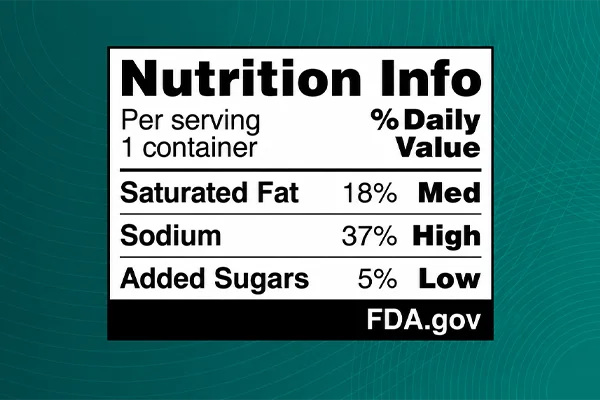
Source: FDA Front-of-Package Nutrition Labeling guide
Under the proposal, the standard Nutrition Info box would display:
- Saturated fat, sodium, and added sugars
- Percentage Daily Value (%DV) for each nutrient
- A Low, Med, or High classification for each nutrient
The FDA’s proposed design uses a simplified black-and-white format intended to make nutrient information easier to identify and compare across products.
Calories would not be included in the proposed Nutrition Info box. However, manufacturers could voluntarily declare calories on the front of packaging when permitted under existing FDA regulations.
The final design and formatting requirements may change before the rule is finalized.
How Would Low, Medium, and High Nutrient Levels Be Calculated?
The FDA’s proposed Nutrition Info box would use % Daily Value (%DV) to determine whether a product contains low, medium, or high amounts of saturated fat, sodium, and added sugars.
The proposed classifications are:
| Classification | Proposed % DV |
| Low | 5% DV or less |
| Med | 6% – 19% DV |
| High | 20% DV or more |
For example, under the proposed thresholds:
- A product containing 4% DV of added sugars would be classified as Low.
- A product containing 15% DV of saturated fat would be classified as Med.
- A product containing 25% DV of sodium would be classified as High.
These examples illustrate the proposed thresholds. Actual label classifications would need to follow the applicable calculation and rounding requirements.
For manufacturers, using nutrition analysis software to track changes to ingredients, formulations, or serving sizes can help identify how nutrient values may affect front-of-package classifications.
Important: These thresholds are part of the FDA’s proposed rule and may change before final requirements are established.
Which Foods Would Require Front-of-Package Nutrition Labels?
The FDA’s proposal generally applies to packaged foods required to display FDA Nutrition Facts labels and marketed to people aged four and older. This could include products such as:
- Packaged snacks and cereals
- Frozen and ready-to-eat meals
- Sauces, dressings, and condiments
- Packaged beverages
- Bakery products and other processed foods
The proposal also includes exemptions and special provisions for certain products, including qualifying small packages and other categories addressed in the proposed regulation.
Dietary supplements, which use Supplement Facts labelling, are not covered by the proposed Nutrition Info box requirements.
Food manufacturers should review the proposed rule’s scope, exemptions, and special provisions before determining how their products could be affected.
When Will FDA Front-of-Package Labels Become Mandatory?
As of October 2026, the Nutrition Info box remains a proposed requirement, and no final compliance date has been established. The FDA published the proposed rule in January 2025 and subsequently extended the public comment period to July 15, 2025. The agency must consider the submitted comments before deciding whether and how to finalize the regulation.
The federal regulatory agenda has projected final action for December 2026. However, this is a planning estimate, not a guaranteed publication date.
What Are the Proposed Compliance Deadlines?
The FDA proposed different compliance timelines based on a business’s annual food sales.
| Annual Food Sales | Proposed Compliance Timeline |
| $10 million or more | 3 years after the final rule’s effective date |
| Less than $10 million | 4 years after the final rule’s effective date |
Under the proposal, the final rule would become effective 60 days after publication in the Federal Register. These timelines are not yet legally binding and may change in the final rule.
What Should Food Brands Plan For?
Even without a confirmed final date, manufacturers can begin preparing for:
- Potential packaging artwork and layout updates
- Additional labelling compliance reviews
- Coordination with packaging suppliers and printers
- Changes to internal approval and product documentation processes
If you are already planning a packaging refresh, consider maintaining flexibility in the design so future FOP requirements can be accommodated without unnecessary rework.
Why Is the FDA Proposing Front-of-Package Nutrition Labelling?
The FDA’s proposal is part of a broader effort to help address preventable, diet-related chronic diseases in the United States, including cardiovascular disease, diabetes, and obesity.
By making information about saturated fat, sodium, and added sugars more accessible, the FDA aims to help consumers identify and compare food products more easily.
The Research Behind the Proposal
Before issuing the proposed rule, the FDA conducted scientific literature reviews, consumer focus groups, and experimental research.
A study conducted in 2023 involving nearly 10,000 U.S. adults evaluated consumer responses to different front-of-package labelling formats.
The FDA reported that the black-and-white Nutrition Info format, combining %DV with interpretive classifications, performed best in helping consumers identify healthier food options based on the nutrients displayed. These findings helped inform the proposed Nutrition Info box design.
How Food Manufacturers Can Prepare for FDA Front-of-Package Labelling
The rule isn’t final yet, but that doesn’t mean food manufacturers have to wait to start preparing. There’s plenty they can do now without changing their labels.
1. Review Saturated Fat, Sodium, and Added Sugars Across Your Products
Take a closer look at the levels of saturated fat, sodium, and added sugars in your products to see how they compare with the proposed FDA thresholds.
- Identify which products may receive a “High” classification.
- Compare nutrient levels across similar products.
- Pay attention to products that are close to the proposed thresholds.
This will give you a clearer picture of how the proposed labelling requirements could affect your products.
2. Validate Your Nutrition Data and Calculation Workflow
Front-of-package labelling would give consumers a quicker way to see key nutrition information when choosing products.
For food manufacturers, this makes it even more important to keep nutrition information accurate and up to date, especially when ingredients or recipes change.
Take a look at how your business currently handles:
- Keeping ingredient and recipe records accurate
- Calculating nutrient values and serving sizes
- Recalculating nutrition information when formulations change
- Tracking recipe changes and label updates
Using nutrition labelling software can simplify this process by helping you manage nutrition data, recalculate values when recipes change, and keep labels up to date as regulations evolve.
3. Evaluate Reformulation Options
The FDA’s proposal doesn’t require manufacturers to reformulate their products, but it may be worth looking at whether certain recipes could benefit from adjustments. For example, reducing sodium or added sugars could affect how a product is classified under the proposed front-of-package labelling system.
4. Plan for Packaging Updates and Compliance Reviews
If the FDA finalizes the rule, food manufacturers covered by the new requirements will need to update their packaging to include the required front-of-package nutrition information.
Depending on their current packaging, this may involve:
- Adjusting packaging designs and layouts
- Checking label size and placement requirements
- Working with packaging suppliers and printers
- Reviewing updated labels for regulatory compliance
- Planning how to use or replace existing packaging inventory
If you’re already planning packaging changes, it’s worth keeping an eye on the FDA’s progress before finalizing any designs. The proposed requirements could still change, and making adjustments too early may lead to unnecessary costs or extra work.
Prepare for FDA Front-of-Package Labelling with MenuSano
As nutrition labelling requirements change, keeping your nutrition data accurate and up to date is more important than ever. MenuSano makes it easier to calculate nutritional values, manage recipes, and generate Nutrition Facts labels, all in one place.
Whether you’re checking saturated fat, sodium, and added sugars or reviewing your products ahead of potential new requirements, MenuSano helps you stay on top of your nutrition information. And when ingredients or formulations change, you can update your recipes, recalculate nutritional values, and generate updated labels without starting from scratch. Make nutrition analysis and labelling easier with MenuSano’s Nutrition Labelling Software.
Frequently Asked Questions About FDA Front-of-Package Labelling
As of October 2026, the FDA’s proposed Nutrition Info box is not mandatory because the rule has not been finalized. Existing FDA labelling requirements continue to apply, including the Nutrition Facts label and applicable regulations governing voluntary front-of-package nutrition information.
A final effective date has not been established. The FDA’s regulatory agenda has projected final action for December 2026, but the actual timing may change. Under the original proposal, manufacturers would have three or four years after the final rule’s effective date to comply, depending on annual food sales.
The proposed Nutrition Info box would display saturated fat, sodium, and added sugars, using Low, Med, or High classifications alongside percentage Daily Values.
Calories would not be included in the proposed Nutrition Info box. Manufacturers could continue voluntarily displaying calories on the front of packaging when permitted under existing FDA regulations.
No. Canada and the United States use different approaches to front-of-package nutrition labelling. Canada’s front-of-package nutrition symbol requirements came into effect on January 1, 2026, for applicable prepackaged foods. Canadian nutrition labels identify foods that are high in saturated fat, sugars, or sodium.
The FDA’s proposed U.S. system would instead classify saturated fat, sodium, and added sugars as Low, Med, or High, with percentage Daily Values included in the standard format. Food businesses selling in both markets should review each country’s labelling requirements separately.
Stay Updated on FDA Front-of-Package Labelling
The FDA’s proposed Nutrition Info box could bring significant changes to how nutrition information appears on food packaging in the United States.
While the rule isn’t final yet, food manufacturers don’t have to wait to start preparing. Reviewing nutrient levels, understanding the proposed classifications, and keeping nutrition data up to date are good places to start.
Having accurate nutrition information now can save time and make it easier to adjust when new requirements are introduced. MenuSano will continue to monitor the FDA’s progress and share updates as more information becomes available.