The use of cannabis has increased in recent years, causing more people in the food industry to engage in conversation around what has proven to be a somewhat controversial ingredient. Cannabis is more commonly known as marijuana and is derived from the cannabis plant. Cannabis can be used for both medical and recreational purposes, and is most commonly known for its two main ingredients: THC and CBD.
When it comes to testing and analyzing the nutritional contents of cannabis, there is a very specific way in which it must be reported, especially when the substance is cooked into consumable items, or “edibles.” That being said, a nutrition label for an item containing cannabis looks very different than a mainstream food label you are used to seeing at the grocery store.
A cannabis edible is essentially a cannabis-infused product that contains Tetrahydrocannabinol, or as it is more commonly known, THC. An edible could also be a cannabis-infused drink. Regardless of their form, edibles contain a significant amount of THC. This is so appealing to consumers because of THC’s relaxing, euphoric effects.
In this blog, we’ll discuss the requirements for reporting cannabis in food products, the complexity of these regulations, and how MenuSano nutritional analysis software can make this process more efficient.
What’s Required for Nutrition Analysis of Cannabis Edibles?
It is a misconception that the nutritional content of cannabis is required on all labels in the same format as other ingredients. In reality, these labels look very different.
The only part of the nutrition label that cannabis is included in is the official claim of how much THC and CBD are present in the edible. These are the ingredients that must be carefully measured and accurately exhibited for consumer knowledge. Not only is it important for consumers to be aware of this to prevent accidental overconsumption, but it is also mandated by Canadian law.
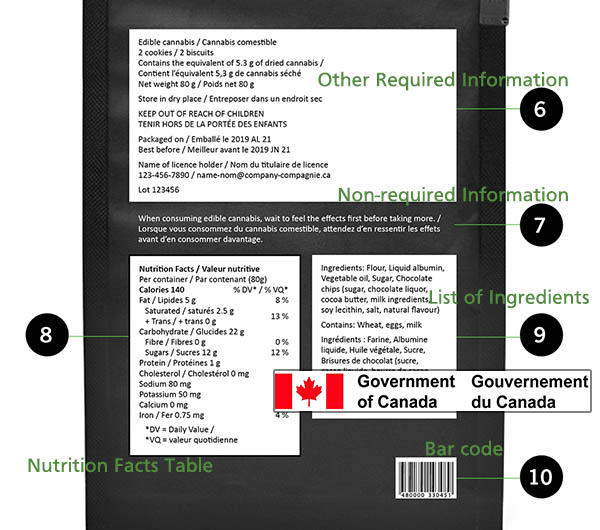
Other Packaging Requirements
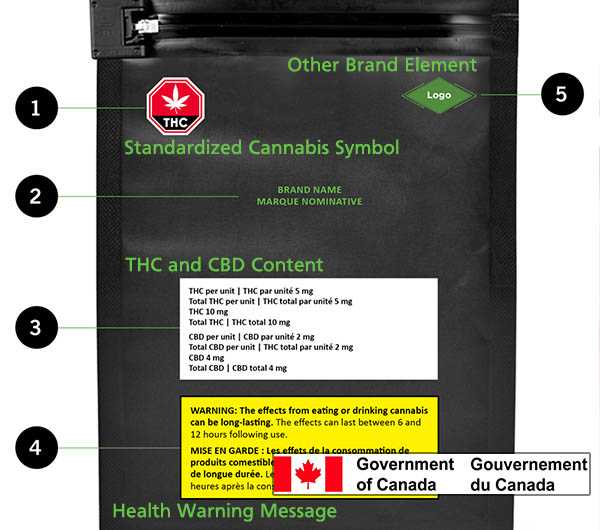
While this may seem simple and straightforward, the packaging requirements for cannabis edibles are very specific. These guidelines must be followed with complete accuracy to ensure a legal, safe, and informed sale of the product. These mandatory features regarding packaging include the following:
- Every label must include a principal display panel (PDP) that must be presented on the main surface of the container, which is normally visible upon purchase or use
- Cannabis products have to be packaged in a child-resistant container for safety purposes
- The brand name of the cannabis product must be clearly stated on the label
- A single, uniform colour must be used, and the coverings of the containers must be fully transparent
- The texture must be smooth, without bumps, engravings or anything raised above the surface of the label
- No hidden features; everything must be visible
- No features that can change the surface area, such as tags or fold-out panels
- No scent or sound can be emitted
- No image of any kind can be included as part of the label
- THC and CBD content must be clearly stated on a label
- The standardized cannabis symbol
- The container must prevent contamination of the cannabis
- The full ingredient list and corresponding table
- Bar code
- International radiation symbol (if applicable)
- Health warning message in a specific layout (colour, measurement, etc.)
- An additional brand element, such as a logo or slogan, is optional but allowed on the packaging
How to Achieve a Nutrition Analysis for Your Cannabis Edibles Product
When it comes down to it, people want to know the nutritional content of what they are eating, cannabis edibles included. As proven by the above information, providing accurate nutritional content for cannabis edibles to consumers requires immense attention to detail. Therefore, it is of the utmost importance for distributors of these products to test what they produce accurately and efficiently. This is where the unparalleled nutritional analysis software, MenuSano, becomes invaluable.
MenuSano is a nutritional analysis software that lets you enter your ingredients and create nutrition facts labels for the dishes/food items you create. By using MenuSano, you can provide customers with nutrition information for your products through detailed, compliant labels.
Using MenuSano to create your nutrition labels is not only efficient, but you, as the owner, can also ensure the information produced is accurate. Without an in-house nutritional analysis software option like this, you may be forced to send your product to a lab for testing. Not only does this take a lot of time and will result in a hefty additional cost, but there is no guarantee of accuracy.
Interested in trying out MenuSano for yourself to see if it’s the right fit for your business? To check it out, sign up for a free trial at MenuSano.com!