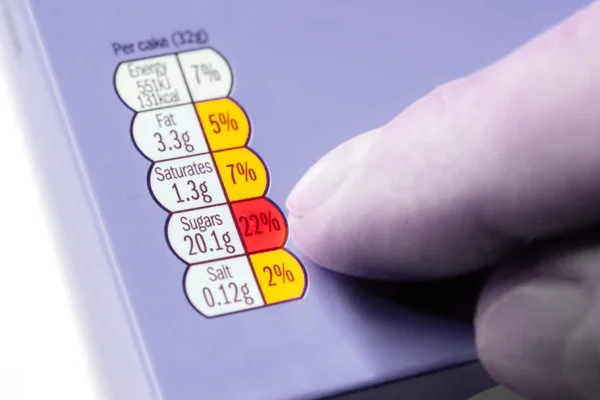
The UK’s traffic light food labelling system is one of the most recognizable nutrition schemes in Europe, designed to help consumers make healthier choices quickly and easily. According to the UK Food Standards Agency, around 49% of shoppers actively use traffic light labels and find them helpful when deciding what to buy. Products with clear nutrition labels have been linked to improved dietary habits and a reduced intake of salt, sugar, and saturated fat.
The traffic light food labelling system is a visual tool designed to help consumers quickly understand the nutritional content of pre-packed foods. Using a simple colour-coded system, red, amber, and green, it highlights levels of fat, saturated fat, sugars, and salt in a product.
Key Takeaways
- The traffic light system uses red, amber, and green colours to indicate high, medium, or low levels of certain nutrients.
- It is designed to be intuitive and straightforward, guiding consumers toward healthier food choices.
- While voluntary for most foods, it is commonly found on pre-packed products in supermarkets and online.
- MenuSano helps food businesses quickly create accurate, compliant traffic light labels, saving time and ensuring nutritional transparency.
How the Traffic Light System Works
Each colour represents the nutrient content per 100g or 100ml of a product:
- Red: High content – consume less frequently.
- Amber: Medium content – acceptable in moderation.
- Green: Low content – generally considered healthier.
Thresholds for each nutrient are roughly as follows (per 100g for solids or per 100ml for liquids):
| Nutrient | Low (Green) | Medium (Amber) | High (Red) |
| Fat | ≤3g | >3g–17.5g | >17.5g |
| Saturates | ≤1.5g | >1.5g–5g | >5g |
| Sugars | ≤5g | >5g–22.5g | >22.5g |
| Salt | ≤0.3g | >0.3g–1.5g | >1.5g |
Note: These thresholds are general guidance. Always refer to the latest UK regulations for the most accurate values.
What Must Be Labelled
Traffic light labelling is voluntary in the UK, but many retailers use it to enhance transparency and consumer trust.
- Mandatory labelling: Nutrition information per 100g or 100ml is required on all pre-packed foods.
- Voluntary traffic light labelling: Can appear alongside the mandatory nutrition table to provide at-a-glance guidance.
- Where you’ll see it: Supermarkets, grocery stores, online food listings, and some restaurant menus.
How to Read a Traffic Light Label
A typical label will show:
- Nutrient values per 100g/100ml and sometimes per portion.
- Colour-coded indicators for fat, saturated fat, sugars, and salt.
Example interpretation:
A product is indicated by green for fat and saturated fats, amber for sugars, and red for salt. This means it is low in fat, moderate in sugars, but high in salt. Consumers might enjoy it occasionally, but should balance their salt intake elsewhere in the day.
| Nutrient | Amount per portion | %RI | Colour |
| Fat | 6g | 9% | Amber |
| Saturates | 1.2g | 6% | Green |
| Sugars | 8g | 9% | Amber |
| Salt | 0.4g | 7% | Green |
When using the label, always check the portion size, as per 100g/100ml values may differ from the serving you consume.
Benefits for Consumers and Businesses
For consumers:
- Quick and easy understanding of nutritional content.
- Supports healthier dietary choices.
- Encourages awareness of high-sugar, high-fat, or high-sodium products.
For businesses:
- Builds consumer trust through transparency.
- Demonstrates compliance with nutritional labelling standards.
- Supports marketing of healthier products.
MenuSano’s Role
MenuSano’s nutrition analysis software automatically calculates fat, saturates, sugar, and salt content per 100g and per portion, assigns the correct traffic light colour, and generates compliant front-of-pack labels. This saves time, reduces errors, and helps food businesses meet both consumer and regulatory demands.
Ready to make your labels clear, compliant, and consumer-friendly? Discover MenuSano’s labelling solutions here.
FAQs
No, but it is strongly encouraged and widely used by major retailers and brands. Nutrition tables per 100g/100ml are required, on the other hand.
Traffic light colours are based on 100g/100ml values. Portion sizes are sometimes listed alongside but may differ.
Traffic lights focus on fat, saturated fat, sugars, and salt. Other nutrients appear in standard nutrition tables.