
How to Calculate Your Nutrient Profiling “HFSS” Score

HFSS score

Share This Post

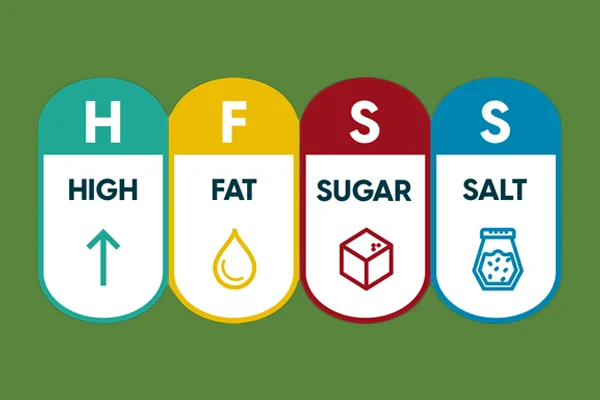
The High Fat, Salt and Sugar (HFSS) nutrient profiling model is central to UK regulations governing the promotion and placement of less healthy food and drink products. Brands, retailers, and food manufacturers must understand and accurately calculate HFSS scores to comply with restrictions on advertising and promotions.

In this detailed guide, we’ll break down the whole process of HFSS calculation, what it means, how it’s done, and which products are affected. By the end, you’ll have a precise understanding of how to use an HFSS calculator, interpret results, and optimize recipes accordingly.

Key Takeaways

  • The HFSS score determines if a product is classified as “less healthy” under UK regulations.
  • It’s calculated by subtracting positive nutrient points (fruit/veg/nuts, fibre, protein) from negative points (energy, saturated fat, sugar, sodium).
  • A score of 4+ for foods or 1+ for drinks means the product is HFSS.
  • Applies to categories like soft drinks, snacks, ready meals, and desserts.
  • Use an HFSS calculator for accuracy and easier reformulation.


What is the HFSS Nutrient Profiling Model?

The HFSS nutrient profiling model, developed by the UK’s Department of Health, assigns a score to food and drink products based on their nutritional composition per 100g. This score determines whether a product is classified as “less healthy” and therefore subject to marketing restrictions.

The model works by awarding points for both negative nutrients (energy, saturated fat, total sugar, and sodium) and positive nutrients (fruit, vegetables and nuts, fibre, and protein). The final HFSS score is the balance of these, indicating the overall healthfulness of the product.

How to Calculate HFSS Score

To calculate your HFSS score, you’ll need a thorough nutritional breakdown of your product. The HFSS model assigns A points for less healthy nutrients and C points for beneficial nutrients. The overall score is calculated by subtracting C points from A points.

Use the calculator below to estimate whether your product is classed as “less healthy” (HFSS) under the UK Nutrient Profiling Model. Choose Food or Drink, then select NPM 2004/05, NPM 2018, or Both to compare results side‑by‑side. All inputs must be per 100g (or per 100ml converted to per 100g for drinks), and the tool will automatically handle common unit swaps like kcal ↔ kJ and salt ↔ sodium. If you’re using the 2018 model, note that it requires free sugars (not total sugars from the label), which typically needs a recipe-based calculation, so treat that score as an estimate unless you have verified manufacturer/recipe data.

Model
Type
NPM 2004/05 – Currently in force for advertising & promotions legislation. Uses total sugars (g) and sodium (mg). Fibre: NSP/Englyst preferred; AOAC accepted. C-points scale 0 – 5 per component.
All models
Common inputs – required for both models
Energy kJ
kJ
per 100g
Saturated fat
g
per 100g
Protein
g
per 100g
Fibre NSP/Englyst
g
NSP preferred for 2004/05; AOAC required for 2018
Fibre method
2018 always uses AOAC
FVN(S) % FVN
%
Fruit, veg & nuts (+ seeds for NPM 2018)
A nutrients
NPM 2004/05 – Total sugars & sodium
Total sugars
g
From back-of-pack label, per 100g
Sodium / salt sodium mg
mg
Enter sodium mg; or switch to salt g (auto-converts: ÷2.5×1000)

Step 1: Calculate A Points (Negative Nutrients)

“A” Points are awarded for the following per 100g of the product:

  • Energy (kJ)
    • 0–3 points depending on energy content
  • Saturated Fat (g)
    • 0–10 points based on saturated fat levels
  • Total Sugars (g)
    • 0–10 points according to total sugar content
  • Sodium (mg)
    • 0–10 points based on sodium levels

NutrientPoints Range
Energy0 to 10
Saturated Fat0 to 10
Sugars0 to 10
Sodium0 to 10

Total these to get your A score.

Step 2: Calculate C Points (Positive Nutrients)

“C” Points are calculated for:

  • Fruit, Vegetables & Nuts (%)
    • 0–5 points awarded based on % by weight
  • Fibre (g)
    • 0–5 points depending on fibre content
  • Protein (g)
    • 0–5 points based on protein levels
NutrientPoints Range
Fruit/Veg/Nuts (%)0 to 5
Fibre (g)0 to 5
Protein (g)0 to 5

Add these together to get your C score.

Step 3: Final HFSS Score Calculation

  • If the A score is less than 11, the final HFSS score = A score − C score (all C points count)
  • If the A score is 11 or more, then protein points are excluded from the C score

Step 4: Determine HFSS Classification

  • For foods: If the final score is 4 or more, the product is classified as HFSS
  • For drinks: If the final score is 1 or more, the product is classified as HFSS

Example HFSS Calculation

Let’s say a product has the following per 100g:

  • Energy: 1500 kJ → 4 points
  • Saturated Fat: 5g → 5 points
  • Sugar: 18g → 6 points
  • Sodium: 600mg → 6 points


A Points Total: 21

  • Fruit/Vegetables/Nuts: 45% → 2 points
  • Fibre: 3g → 2 points
  • Protein: 6g → 3 points


C Points Total: 7 (only fruit/veg and fibre used since A ≥11)

Final HFSS Score = 21 – (2+2) = 17 → Product is classified as HFSS.

Businesses often use an HFSS calculator to simplify the process. This calculator automates these steps using the product’s nutritional data. However, manual knowledge of the score breakdown is vital for recipe reformulation and regulatory compliance.

What Foods Does HFSS Apply To?

Foods that HFSS apply to - image ice cream bowl and berries

Understanding which products fall under HFSS regulations is essential. The rules for promotions and advertising are particularly stringent in the UK.

Categories Covered Under HFSS Rules

The UK’s Food (Promotion and Placement) (England) Regulations 2021 apply HFSS restrictions to the following categories:

  • Soft drinks
  • Confectionery
  • Cakes and biscuits
  • Breakfast cereals
  • Ice creams and desserts
  • Pizza and ready meals
  • Yogurts and dairy desserts
  • Sauces and dressings
  • Crisps and savoury snacks
  • Breaded or battered foods

If your product falls into one of these categories, it must undergo an HFSS calculation to determine whether marketing restrictions apply.

Exemptions and Considerations

Certain products are exempt from HFSS restrictions:

  • Foods not in the listed categories
  • Small and medium-sized businesses (with fewer than 50 employees) may be exempt from some placement restrictions
  • Specialty products such as meal replacements or medical nutrition may not require HFSS classification

However, exemptions can vary based on local implementation, and it is recommended to confirm with legal or regulatory advisors.

Why You Should Use an HFSS Calculator

why use hfss calculator - image shrimp poke bowl with fruits and vegetables

Using an automated HFSS calculator can help you:

  • Save time with fast nutrient profiling
  • Identify reformulation opportunities
  • Easily test new product variations
  • Ensure accurate, regulation-compliant scoring

Reliable calculators such as those provided by NutriCalc or Sauce Shed offer simple tools where you enter your nutrition data, and the HFSS score is instantly generated. These tools often help identify which ingredients push the score over the threshold, enabling food developers to make targeted improvements.

Best Practices for HFSS Compliance

Here are several strategies to help your products avoid HFSS classification:

  • Increase fibre: Use whole grains, legumes, or fibre-enriched ingredients
  • Reduce added sugars: Replace with polyols or natural sweeteners
  • Lower saturated fat: Switch to healthier fats or reduce fat content
  • Enhance protein only if the A score is below 11
  • Boost fruit/veg/nut content: Especially important in scoring

Regularly using an HFSS calculator during product development and reformulation allows you to maintain compliance without sacrificing flavour or consumer appeal.

How MenuSano Can Help

To successfully navigate the HFSS regulations, businesses must understand how to calculate HFSS scores, know which products are impacted, and adopt practical tools like an HFSS calculator. With this knowledge, food and beverage companies can make informed decisions that balance nutritional standards with commercial viability.

MenuSano is a user-friendly, cloud-based software designed to create nutrition facts labels and supplement labels that meet regulatory standards. It’s built to support food manufacturers, restaurants, healthcare institutions, and even businesses in the cannabis industry.
Schedule a free demo or start your free trial today to see how MenuSano can simplify your labelling process.

More To Explore

Roasted Peanuts Spilling from Metal Container on Table

The 14 Major Food Allergens: UK Labelling Guide

Allergen management is an essential pillar of food safety and consumer protection in the United Kingdom. Food businesses have a legal and ethical responsibility to

Get the Benefits of all these Features and More ->

Ready to buy?

If you’re not 100% sure yet, start with our free trial and upgrade when you’re ready.

Ready to buy?

If you’re not 100% sure yet, start with our free trial and upgrade when you’re ready.

Ready to buy?

If you’re not 100% sure yet, start with our free trial and upgrade when you’re ready.

Ready to buy?

If you’re not 100% sure yet, start with our free trial and upgrade when you’re ready.

Ready to buy?

If you’re not 100% sure yet, start with our free trial and upgrade when you’re ready.

Ready to buy?

If you’re not 100% sure yet, start with our free trial and upgrade when you’re ready.

Contact Us


We take your privacy seriously and will never share your information.

The Healthy Menu Podcast

Request a Feature

Contact Us

We take your privacy seriously and will never share your information.