Shelf life is one of those topics that sounds simple until you actually have to put a date on a label.
In practical terms, shelf life is the time a food remains safe and of acceptable quality when stored under specific conditions (temperature, packaging, light exposure, etc.). For some foods, shelf life is mainly about quality (staling, flavour loss, texture changes). For others, it’s primarily about safety (microbial growth and toxin risk).
If you’re a food business trying to “calculate shelf life,” here’s the honest answer: you don’t calculate it with a single equation. You determine it using a combination of:
- product knowledge (ingredients + process)
- risk assessment (what can go wrong)
- testing (real-time, accelerated, and/or challenge testing)
- clear pass/fail limits (what “end of shelf life” means)
This guide walks through the real-world methods used by food manufacturers, packaged-food brands, restaurants producing retail items, and anyone who needs to justify a best-before or use-by date. MenuSano helps food businesses centralize recipe data, labeling, and documentation in one place.
If you want a structured way to estimate shelf life risks based on pH, water activity, storage conditions, and packaging, try our Free Shelf Life Calculator.
Key takeaways
- Shelf life is determined by safety + quality under defined storage conditions (temperature, packaging, light exposure).
- First, decide whether you need a best-before date (quality) or a use-by date (safety).
- Lock your product version (ingredients, process, packaging), then identify what will trigger the end of shelf life: microbiological, chemical, physical, or sensory failure.
- Use the right method for your risk and timeline: real-time testing (most defensible), ASLT (faster quality estimate), challenge testing (safety validation), and/or predictive modelling (supporting evidence).
- Focus on the biggest drivers: pH, water activity (aw), temperature control, and oxygen/light exposure.
- Document your rationale and results so your shelf-life decision is defensible and easy to maintain as products change.
What is food shelf life? (Definition)
Food shelf life is the period during which a product remains safe to eat and of acceptable quality when stored under defined conditions, such as temperature, packaging, and light exposure.
Shelf-life decisions are often linked to HACCP hazard analysis and regulatory expectations from authorities and standards bodies, such as the FDA, CFIA, and Codex Alimentarius (and, depending on where you sell, other regulators like EFSA). You don’t need to turn this into a regulatory deep dive; just make sure your shelf life rationale is defensible and documented.
Best-before vs Use-by: what you’re actually deciding
Before you do any testing, get clear on the type of date you need.
Best-before date (quality-driven)
A best-before date is used when the product may still be safe after the date, but quality is likely to decline. Think: flavour, texture, aroma, appearance, crispness, separation, or staling.
Examples (often best-before, depending on formulation and storage):
- cookies, crackers, granola
- shelf-stable sauces
- many dry mixes
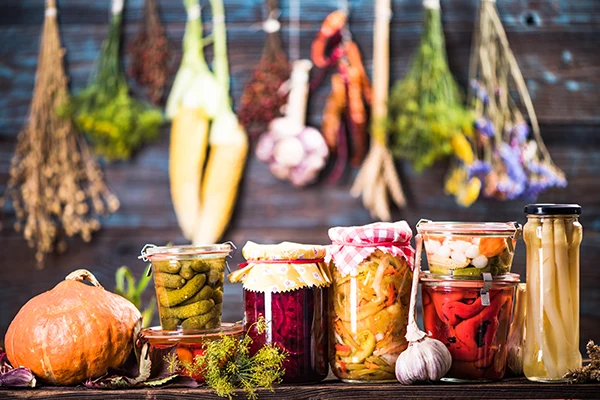
- Some preserved foods where the safety risk is low, and quality is the main concern
Use-by date (safety-driven)
A use-by date is used when consuming the product after the date could be unsafe. This is where microbiology matters most.
Examples (often use-by, depending on product):
- ready-to-eat refrigerated meals
- chilled dips, cooked meats, dairy-based products
- foods that support pathogen growth if temperature control fails
Key point: the difference isn’t marketing, it’s risk. If you’re unsure, treat it as a safety question first. When you finalize your date marking, make sure your packaging includes accurate nutrition labelling.
Step 1: Define the product (and lock the version you’re testing)
Shelf life results only apply to the product you actually tested. If the recipe, process, or packaging changes, your shelf life may need to be revalidated.
Document these clearly (keep it simple, but specific):
If you need a fast way to generate a compliant ingredient statement from your formulation, use our Ingredient List Maker.
Ingredients and formulation
- key ingredients and functional components (salt, sugar, acids, preservatives, stabilizers/emulsifiers)
- fat type (oxidation risk varies a lot by oil/fat)
Processing method
- cooking temps/times, cooling method/time
- any kill step (pasteurization/retort/hot-fill), if used
- post-process contamination risks (handling, slicing, filling, etc.)
Packaging
- container type + barrier properties (oxygen, moisture, light)
- seal method (heat seal, induction seal, etc.)
- vacuum or modified atmosphere packaging (MAP), if applicable
Intended storage and distribution
- ambient/refrigerated/frozen
- expected transport time and temperature variation
- “once opened” expectations (if relevant)
Step 2: Identify what will end shelf life (your failure modes)
Shelf life ends when the product fails a defined limit. Those limits should be based on:
- safety
- quality
- legal/compliance requirements
- customer expectations
Common shelf-life endpoints include:
Microbiological failure (safety and/or spoilage)
- pathogen growth risk (product supports growth under intended storage)
- spoilage organism growth (yeast/mould, lactic acid bacteria, etc.)
- total viable count exceeding your internal limit
- toxin formation risk (depends on product and conditions)
Chemical failure
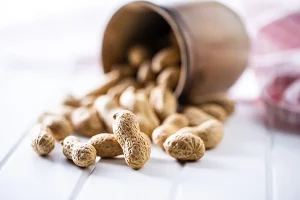
- rancidity/oxidation (especially in foods with unsaturated fats such as nuts, seeds, and vegetable oils)
- pH drift (can change microbial risk over time)
- preservative degradation or reduced effectiveness
Physical failure
- moisture migration (crispy becomes soggy, dry becomes stale)
- separation (emulsions breaking, sauces splitting)
- crystallization (sugar bloom, fat bloom)
- packaging failure (seal leaks, swelling, oxygen ingress)
Sensory failure (quality)
- off-odours, off-flavours
- unacceptable texture changes
- colour changes beyond the acceptable range
A shelf life plan is basically: “Which of these is most likely to happen first, and how will we measure it?”
Read more: How to Create a Nutrition Fact Label from a Recipe
Step 3: Understand the big predictors: pH, water activity, temperature, oxygen
A lot of shelf life comes down to a few core variables:
pH
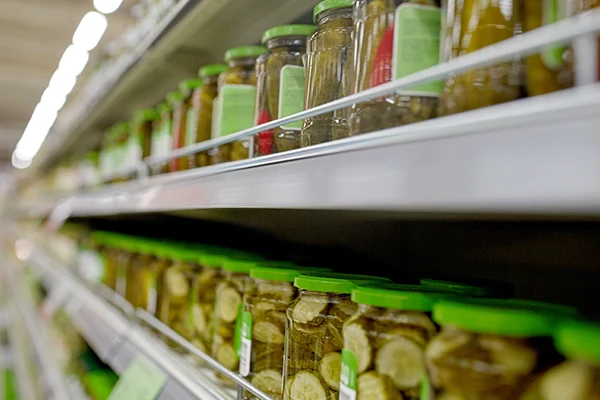
Lower pH generally reduces the risk of microbial growth. Acidified foods often have longer safe shelf lives (but quality can still degrade).
Water activity (aw)
Water activity is one of the strongest predictors of microbial growth.
As a practical rule of thumb:
- Most bacteria cannot grow below a water activity of about 0.90
- Many yeasts and moulds can grow at lower water activity levels than most bacteria
(Exact thresholds vary by organism and product; use this as a directional guide, not a standalone safety decision.)
Temperature (and temperature abuse)
Refrigeration slows growth but doesn’t stop it. Real distribution chains have variability; your shelf-life decision should reflect reality, not perfect storage conditions.
Oxygen and light exposure
Oxygen drives oxidation (rancidity, colour changes) and can affect some vitamins and flavours. Light can accelerate oxidation and pigment breakdown.
These variables help you decide what testing you need and what “worst case” storage looks like.
Typical Shelf Life Ranges by Food Type
| Food Type | Typical Shelf Life |
| Fresh refrigerated meals | 3 – 10 days |
| Bakery products | 3 – 7 days |
| Shelf-stable sauces | 6 – 24 months |
| Refrigerated dips | 2 – 6 weeks |
| Frozen meals | 3 – 12 months |
Step 4: Choose the right shelf life method (most businesses use a mix)
There’s no single method that fits every product. The right approach depends on risk, budget, timeline, and how defensible you need the result to be.
Method A: Real-time shelf life testing (most defensible)
This is the gold standard: store the product under intended conditions and test it over time.
How it works:
- define storage conditions (e.g., 39°F refrigerated, sealed package)
- choose sampling points (e.g., day 0, 3, 7, 10, 14, 21)
- test microbiology/chemistry/sensory at each point
- shelf life ends at the first failure point
Pros:
- most realistic and defensible
- directly reflects your product and packaging
Cons:
- takes time
- can be costly if you run extensive lab panels
Method B: Accelerated Shelf Life Testing (ASLT) (faster estimate)
ASLT increases stress (often temperature) to accelerate deterioration, then uses that data to estimate shelf life under normal conditions.
Best for:
- quality-driven shelf life (texture, rancidity, colour)
- early-stage product development
- comparing packaging options quickly
Caution:
Acceleration doesn’t always mimic real spoilage pathways, especially in microbiology. Use ASLT carefully for safety-driven decisions.
Method C: Microbial challenge testing (for safety validation)
Challenge testing involves inoculating a product with target organisms and observing whether they grow under intended (and sometimes “abuse”) conditions.
Best for:
- ready-to-eat refrigerated foods
- products where Listeria or other pathogens are a concern
- validating a use-by date
Pros:
- strong safety evidence
- helps quantify growth potential
Cons:
- requires specialized labs and strict protocols
- not necessary for every product, but crucial for higher-risk categories
Method D: Predictive modelling (supporting evidence)
Predictive microbiology models estimate growth based on pH, aw, salt, preservatives, and temperature.
Best for:
- planning your test strategy
- narrowing down likely shelf life ranges
- supporting HACCP decisions
Important: modelling is often used alongside real testing, not as a standalone proof.
Step 5: Set your storage conditions (be specific and realistic)
Shelf life is always conditional. You’re not just determining “how long it lasts,” you’re determining:
How long does it last under X conditions in Y packaging with Z handling?
Define:
- storage temperature (and acceptable range)
- humidity (if relevant)
- light exposure (retail display vs dark storage)
- unopened vs opened (if you’ll provide “once opened” guidance)
- distribution simulation (transport time, vibration, time out of refrigeration)
Step 6: Decide what you’ll measure (your “critical indicators”)
Pick indicators that match your likely failure modes.
Microbiological indicators
- total viable count (TVC)
- yeast and mould
- relevant pathogens (as appropriate for product and risk profile)
Chemical indicators
- pH
- water activity (aw)
- oxidation markers (e.g., peroxide value) for fat-containing foods
Physical indicators
- viscosity (for sauces)
- moisture/texture changes (for baked goods)
- packaging integrity (seal checks, leakage, swelling)
Sensory indicators
- taste, aroma, appearance, texture
- consistent scoring + acceptance threshold
- notes on why a sample fails (useful for reformulation)
Tip: define your pass/fail criteria before you start testing. Otherwise, it’s too easy to “move the goalposts” later.
Step 7: Build a sampling plan that matches your intended shelf life
A common mistake is sampling too infrequently and missing the actual failure point.
If you think shelf life might be ~14 days, don’t only test day 0 and day 14. Add intermediate points (e.g., day 7, 10, 12, 14, 16). The closer you get to the expected endpoint, the more valuable frequent sampling becomes.
Also consider:
- multiple batches (to account for normal variation)
- multiple units per time point (to reduce “one bad unit” bias)
- worst-case units (e.g., those filled last, or those with more headspace)
Step 8: Determine the shelf life endpoint (and apply a safety margin)
Shelf life is typically the earliest point where any critical limit fails. Many businesses apply a margin for real-world variability:
- production variation
- distribution temperature swings
- consumer handling
- measurement uncertainty
For best-before dates, the margin may be smaller and quality-driven. For use-by dates, the margin should be conservative and safety-driven.
Step 9: Document everything (this is what makes it defensible)
Shelf life isn’t just a number; it’s a decision you should be able to justify.
Your documentation should include:
- product specification (recipe + process + packaging)
- storage conditions and assumptions
- test plan and sampling schedule
- lab reports and sensory results
- defined pass/fail limits
- rationale for the final best-before or use-by date
- consumer storage instructions (e.g., “Keep refrigerated at or below 40°F”)
This matters for audits, retailer requirements, and internal consistency when the product changes.
Common shelf life pitfalls (and how to avoid them)
- Testing the “perfect” version of the product
If your real production line has variability, test representative batches. Shelf life that only works under ideal conditions won’t hold up in real distribution. - Ignoring packaging as a shelf life driver
Packaging is often the difference between 7 days and 21 days. Oxygen and moisture barrier properties matter. - Confusing spoilage with safety
A product can be unsafe before it “smells bad,” and some products can smell off even when they’re safe. Your plan needs both safety and quality criteria. - Not defining “once opened” guidance
If consumers will open and reclose, you may need separate guidance: “Once opened, consume within X days.” - Using accelerated testing as a shortcut for safety decisions
ASLT is great for quality. For safety-driven shelf life, you’ll often need real-time data and/or challenge testing.
Quick checklist: calculating shelf life the practical way
- Define whether you need best-before or use-by
- Lock the product spec (recipe/process/packaging)
- Identify likely failure modes (micro, chemical, physical, sensory)
- Choose method(s): real-time, ASLT, challenge test, modelling
- Define storage conditions (realistic distribution assumptions)
- Pick indicators and set pass/fail limits
- Build a sampling schedule (more frequent near the expected endpoint)
- Run the study and identify the first failure point
- Apply the margin and finalize the date
- Document and write clear storage instructions
Final note (and a practical next step)
Shelf-life decisions sit at the intersection of food safety, quality, and business realities. The “right” shelf life is the one you can defend with clear assumptions, appropriate testing, and solid documentation.
If you want to build labels and documentation from the same recipe data you’re using for shelf-life decisions, or simply need nutrition analysis done, then start a free trial or check our pricing page.If you’re working on a new product (or updating an existing one), run through the calculator first, then use the output to decide what testing path makes the most sense for your risk level and timeline.
MenuSano is a nutrition label maker built for food businesses that want accurate, compliant labels without spreadsheet work. It also includes nutrition analysis software so recipe changes update your numbers fast.