
Food labelling in the United Kingdom is designed to help consumers make informed choices, and one of the most important elements on any nutrition label is the Nutrient Reference Value (NRV). Whether you’re a food manufacturer, retailer, or simply a curious consumer, understanding NRVs is crucial for accurately interpreting nutrition information and complying with UK food regulations.
Key Takeaways
- Nutrient Reference Values (NRVs) are benchmarks for daily nutrient intake, used on food labels in the UK and EU.
- NRVs help consumers compare products and make healthier choices.
- NRVs are different from Reference Intakes (RIs) and are set for vitamins and minerals, not energy or macronutrients.
- Dietary Reference Values (DRVs) underpin NRVs and offer age-specific guidance for nutrition.
- Accurate NRV labelling is essential for regulatory compliance, and MenuSano’s software helps food businesses automate this process.
What Are Nutrient Reference Values (NRVs)?
Nutrient Reference Values (NRVs) are standardized values that represent the daily amount of vitamins and minerals considered sufficient for the average adult. In the UK and across the EU, NRVs are used on food labels to indicate the percentage of the recommended daily intake that a serving of food provides.
For example, if a breakfast cereal provides 2.4mg of iron per serving and the NRV for iron is 14mg, the label would show that one serving provides 17% of the NRV for iron.
NRVs are set for a wide range of vitamins and minerals, including:
- Vitamin A
- Vitamin C
- Vitamin D
- Iron
- Calcium
- Zinc
- And many more
You can find the full list of NRVs in the UK Food Information Regulations and on the Government’s official nutrition labelling guidance.
Reference Intakes (RIs) vs. NRVs: What’s the Difference?
While both NRVs and Reference Intakes (RIs) appear on UK food labels, they serve different purposes:
- NRV is used specifically for vitamins and minerals.
- RI is used for energy, fat, saturated fats, carbohydrates, sugars, protein, and salt.
For example, the RI for energy is 2,000 kcal per day for an average adult, but NRVs are unique to each vitamin and mineral.
To learn more about Reference Intakes and how they appear on labels, check out: Reference Intakes (RI) for UK Food Labels
Dietary Reference Values (DRVs) and Age-Specific Guidance
DRVs are broader nutrition recommendations set by the UK’s Scientific Advisory Committee on Nutrition (SACN) and underpin NRVs. DRVs include:
- Estimated Average Requirements (EAR)
- Reference Nutrient Intakes (RNI)
- Lower Reference Nutrient Intakes (LRNI)
- Safe Intake
While NRVs are used for labelling and based on adult needs, DRVs provide more detailed, age- and gender-specific recommendations, which are especially important for manufacturers producing foods for children or special populations.
How Are NRVs Calculated and Displayed on UK Food Labels?
Manufacturers must calculate the percentage of the NRV a serving provides and display this on the nutrition label, typically in a table:
| Nutrient | Per 100g | % NRV |
| Vitamin C | 40mg | 50% |
| Iron | 7mg | 50% |
How to calculate:
Divide the nutrient amount per serving by the NRV, and then multiply the result by 100.
Best practices:
- Use the correct NRV values as set by UK law.
- Ensure percentages are accurate and based on the serving size.
- Highlight NRV information clearly for consumer understanding.
For more on food labelling requirements, see: Understanding UK Food Labelling Regulations
Tolerances and Variability in Declaring NRVs
Due to the natural variability in food production (including seasonal changes, ingredient sources, and processing), the nutrient values on food labels are subject to tolerances. The European Commission provides guidelines on permissible tolerances to account for this. Manufacturers must ensure declared values are accurate and within allowed margins, as misleading or incorrect labelling can result in penalties or loss of consumer trust.
Fibre and Voluntary Labelling
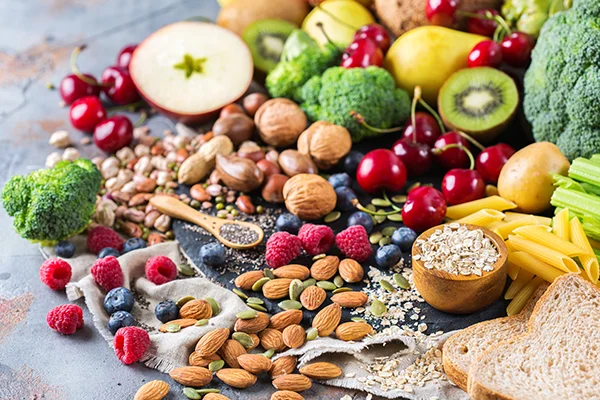
There is no specific Reference Intake (RI) for fibre on standard UK food labels, but health guidelines recommend 30g per day for adults. Manufacturers may voluntarily label fibre content and can make claims like “source of fibre” (at least 3g per 100g) or “high in fibre” (at least 6g per 100g). Accurate fibre labelling helps meet consumer demand for information on digestive health.
Calculation Methods and Practical Tips for Manufacturers
- Nutrient values can be determined by laboratory analysis, ingredient averages, or trusted food composition databases (like McCance and Widdowson).
- For foods that require preparation (e.g., dry mixes), nutrient values should reflect the food as consumed, with clear preparation instructions provided.
- Keep thorough records for your calculations and update them if recipes or suppliers change.
- For age-specific products, ensure declarations match the relevant DRVs for the target group.
- Use software like MenuSano to automate calculations and generate compliant, error-free labels.
Age-Specific and Special Group Considerations
NRVs on labels are based on adult needs, but DRVs offer detailed recommendations for children, the elderly, and other groups. Manufacturers producing foods for these populations must ensure their labelling and claims comply with the correct requirements.
NRVs and Nutrition/Health Claims
To make a nutrition claim (e.g., “high in vitamin D”), products must provide a significant percentage of the NRV per serving, usually at least 15%. Health and nutrition claims must comply with UK/EU law and be supported by accurate NRV calculations.
Data Sources: Widdowson and McCance
Accurate NRV labelling relies on trustworthy food composition data. In the UK, the gold standard is McCance and Widdowson’s food composition tables. These tables provide detailed information on the nutrient content of thousands of foods and are the foundation for MenuSano’s nutrition analysis.
Want to know more about these data sources?
Read: Widdowson and McCance: The Foundation of UK Food Composition Data
How MenuSano Makes NRV Labelling Easy
MenuSano’s software simplifies NRV calculations and nutrition labelling for food businesses of all sizes. With MenuSano, you can:
- Instantly calculate NRV percentages for all vitamins and minerals in your recipes.
- Generate compliant nutrition labels for the UK, US, and Canada.
- Access up-to-date food composition data, including McCance and Widdowson.
- Account for tolerances and update labels as recipes or regulations change.
- Reduce the risk of errors and regulatory issues.
Ready to streamline your nutrition labelling and ensure NRV compliance? Create UK-compliant nutrition facts labels.
No, NRVs are for vitamins and minerals; RIs are for energy and macronutrients.
Only for vitamins and minerals present in significant amounts, as specified by UK law.
Fibre labelling is voluntary, but claims like “source of fibre” or “high in fibre” must meet specific thresholds.